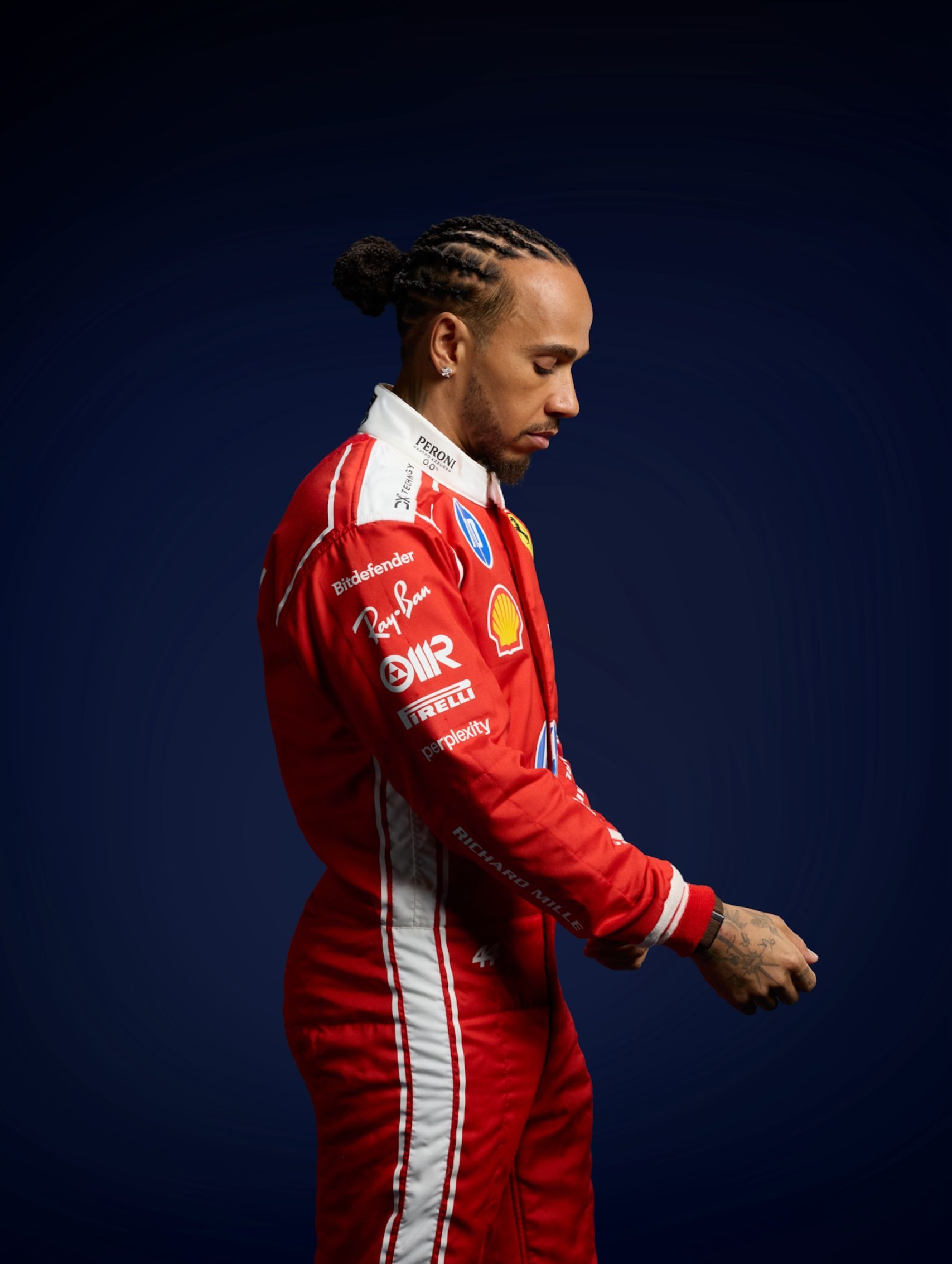
COMPETE TO THE BEAT

Formula 1 drivers use music to both train and motivate themselves before races. Scientific research proves this is a winning strategy, as music writer John Lewis discovers.
Sometimes, the most potent performance enhancer for an athlete might be a song.
Costas Karageorghis is a professor in sport and exercise psychology at Brunel University of London. His research proves that the correct type of music can improve an athlete’s performance. “By elevating their mood, by syncing music’s rhythmic qualities with their body’s movements, or by distracting them from physical discomfort,” he explains.
The evidence, he says, citing more than 100 psychological studies, shows that selecting the correct kind of music during training can improve endurance and positivity. “Music lowers your perception of effort,” he adds. “It can trick your mind into feeling less tired during a workout and also encourage positive thoughts.”
At its most basic, music is a simple pulse for a training athlete. A runner wanting to achieve a stride rate, or a rower wanting to sustain a stroke rate, can use music to maintain cadence. Musical playlists can now be tailor-made for precise beats per minute to regulate speeds.
Such synchronisation can help with motor skills and motivation.
But research shows that music’s role is more complex than that. It can affect an athlete’s perceptions of exertion. It can induce alpha brainwave activity, leading to a state where athletes are fully immersed, almost feeling like they are on autopilot. The brain’s motor cortex, which controls motor function and coordination, allows us to find our own rhythm during physical activity.